Why This Exists
Speed without structure leads to chaos.
Structure without speed leads to
stagnation.
The Workflow
graph LR
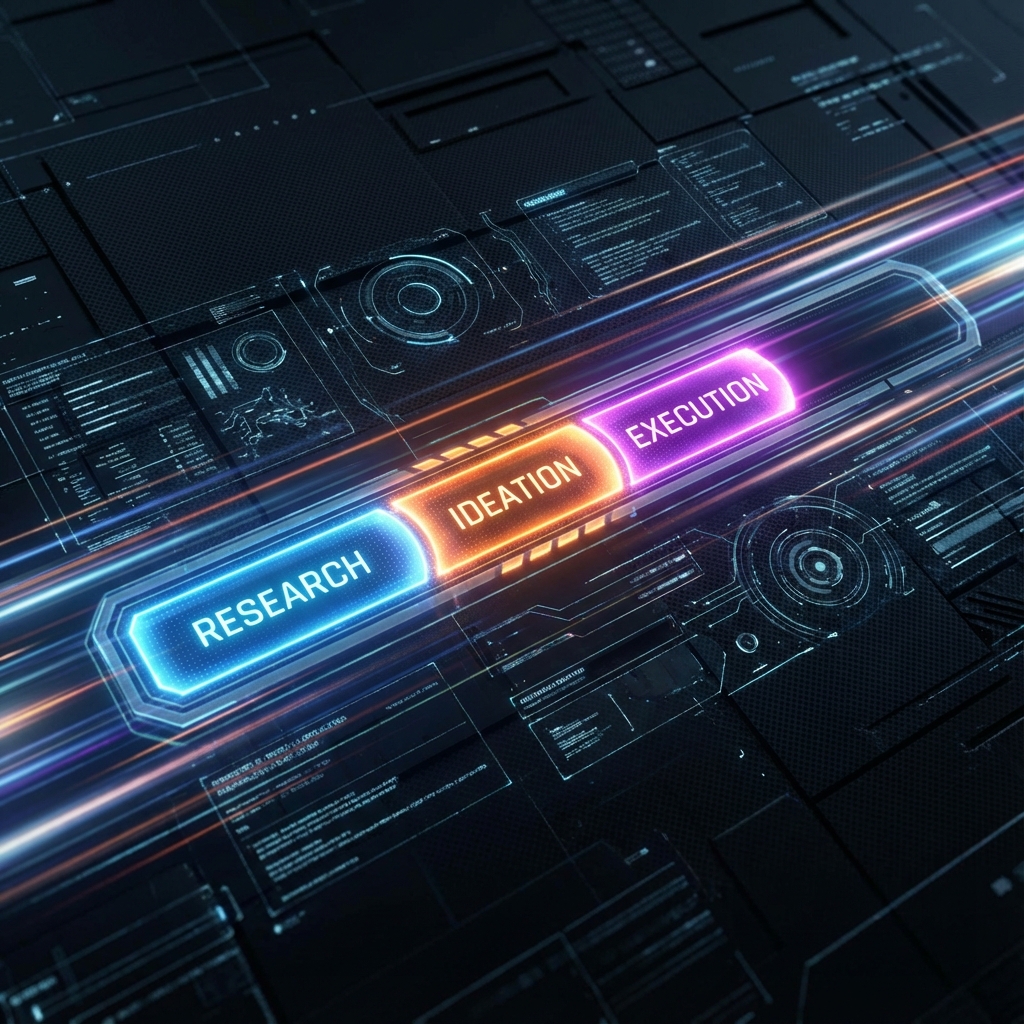
A[Problem Definition] --> B[Research & Analysis]
B --> C[AI Ideation]
C --> D[Human Refinement]
D --> E[Execution & QA]
E --> F(Feedback & Iteration)
style A fill:#1a1a1a,stroke:#F3C518,stroke-width:2px,color:#fff
style B fill:#1a1a1a,stroke:#F3C518,stroke-width:2px,color:#fff
style C fill:#333,stroke:#F3C518,stroke-width:4px,color:#F3C518
style D fill:#1a1a1a,stroke:#F3C518,stroke-width:2px,color:#fff
style E fill:#1a1a1a,stroke:#F3C518,stroke-width:2px,color:#fff
style F fill:#1a1a1a,stroke:#F3C518,stroke-width:2px,color:#fff
- 1. Problem definition
- 2. Research & pattern analysis
- 3. AI-assisted ideation
- 4. Human refinement
- 5. Execution & QA
- 6. Feedback & iteration
Where AI Helps
- Research synthesis
- Copy drafts
- Visual exploration
- Variant generation
Where Humans Lead
- Strategy
- Taste
- Final decisions
- Quality control
Outcome & Validation
- Faster turnaround
- Consistent quality
- Reduced execution friction
Key Learnings
- AI is leverage, not strategy
- Systems create reliability
- Speed comes from clarity
Why This Matters for Clients
Clients don’t pay for tools — they pay for outcomes delivered reliably.